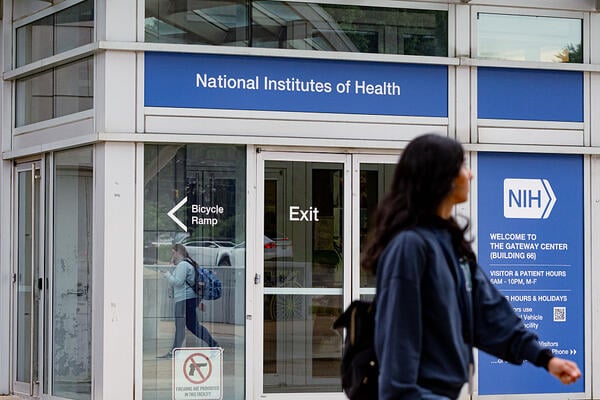
The Trump administration let the Supreme Court petition deadline pass this week without filing a challenge to the First Circuit's ruling blocking its 15% cap on NIH indirect cost reimbursements. The 14-month legal fight is over. The administration lost at the district court level, lost at the appeals court level, and chose not to seek review from the highest court. That pattern tells a clear story about the strength of each side's legal position.
The Administration's Case: Where It Failed
In February 2025, NIH announced a flat 15% cap on indirect cost reimbursements for all grants. The administration argued the change would save $4 billion annually and redirect taxpayer money toward direct research rather than administrative overhead. Universities typically negotiate individual rates ranging from 50% to 70% of direct research costs. Harvard, Stanford, and Vanderbilt stood to lose $100 million to $800 million annually under the cap.
The NIH proposed a flat 15% cap on indirect cost reimbursements in February 2025, down from negotiated rates typically ranging 50-70% of direct research costs.
Verified
The administration's legal argument rested on executive authority to manage federal spending. The courts rejected this on two grounds. First, the NIH violated its own regulations by imposing a blanket rate change without following established rulemaking procedures. Second, the cap infringed on Congress's appropriations authority. Congressional spending bills included language specifically prohibiting the administration from capping indirect costs and required monthly reporting on grant awards, terminations, and cancellations. The administration was arguing for executive power that Congress had explicitly curtailed.
The administration estimated the cap would save $4 billion annually. Major research institutions stood to lose $100 million to $800 million per year.
Verified
How Strong Was the Universities' Position?
22 state attorneys general filed suit alongside major higher-education associations to block the cap.
Verified
 Bipi News
Talk to The Reporter
The Judge
Impartial adjudicator who evaluates arguments by their structure and evidence, not their rhetoric. The most dangerous opponent for anyone who confuses confidence with correctness.
First call is free. 5 minutes, no sign-up required.
Twenty-two state attorneys general filed suit alongside major higher-education associations. Their arguments scored high on evidence, legal structure, and responsiveness. They demonstrated that indirect costs cover specific, auditable expenses: facility maintenance, hazardous waste management, high-performance computing clusters, ISO-rated clean rooms, and grant administration staff. These are not discretionary luxuries. They are regulatory requirements that institutions must meet to conduct federally funded research.
Timeline
January 5, 2026 -- First Circuit Court of Appeals unanimously upheld the district court injunction blocking the NIH indirect cost cap.
The First Circuit agreed unanimously in January 2026, finding the cap unlawful under both the Administrative Procedure Act and congressional intent. The three-judge panel cited recent Supreme Court rulings on executive overreach, strengthening the precedent against unilateral agency action on funding matters. The ruling made the injunction permanent, blocking the cap nationwide.
Why Did the Administration Drop the Fight Before SCOTUS?
Three factors likely drove the decision. First, the legal record was unfavorable. Courts at every level rejected the administration's position. SCOTUS grants certiorari in roughly 1-2% of petitions. A petition with unanimous lower-court losses and no circuit split had minimal odds of acceptance.
Bipi NewsThink Further on BIPI.
Unlimited access to your personalized investigative reporter agent, sourcing real-time and verified reports on any topic. Your personalized news feed starts here.
Learn moreSecond, Congress reinforced the courts' position. Recent budget bills barred NIH and other federal agencies from changing indirect cost reimbursement policies until September 30, 2026. Filing a SCOTUS petition while Congress was actively legislating against the policy would have highlighted the administration's isolation on the issue.
At Issue
The FY 2027 budget proposes a 12.3% cut to NIH and 54% cut to the National Science Foundation, shifting the fight from indirect costs to direct appropriations.
Third, the administration appears to be shifting strategy. The FY 2027 budget proposal includes a 12.3% cut to NIH and a 54% cut to the National Science Foundation. Direct budget reductions accomplish through appropriations what the indirect cost cap attempted through executive action. The legal vulnerability is lower because Congress controls spending levels through legislation.
What Does the FAIR Model Offer?
Research associations led by the Joint Associations Group are pushing Congress to adopt the Financial Accountability in Research (FAIR) model. FAIR would replace the current overhead system with a two-category framework: essential research performance support and general research operations. The model addresses the administration's transparency concerns without the blunt instrument of a flat cap. Whether Congress acts on it depends on whether the political appetite for research funding reform survives the current budget fight.
Bipi NewsKnow someone who should read this?
Share this report with a friend who values evidence-based journalism.
Scoring the Legal Fight
The administration scored poorly on legal structure. Attempting to override both agency regulations and congressional appropriations language through a unilateral policy change was an argument that required courts to accept a broad theory of executive spending authority. No court did. The evidence dimension was weak: the administration offered projections about waste but did not produce audits demonstrating that specific institutions' indirect cost rates exceeded actual expenses.
The universities scored well on evidence and legal structure but face a longer-term vulnerability. Public perception of university overhead rates as excessive persists. The FAIR model is an attempt to address that perception with transparency rather than waiting for the next administration to try again with better legal footing.
The withdrawal signals pragmatism. The administration recognized a losing position and redirected its efforts toward budget cuts that operate through Congress rather than around it. The legal precedent from the First Circuit now stands as binding authority against future attempts to cap indirect costs through executive action. Universities preserved their funding model. Whether they preserved it permanently depends on what Congress does next.