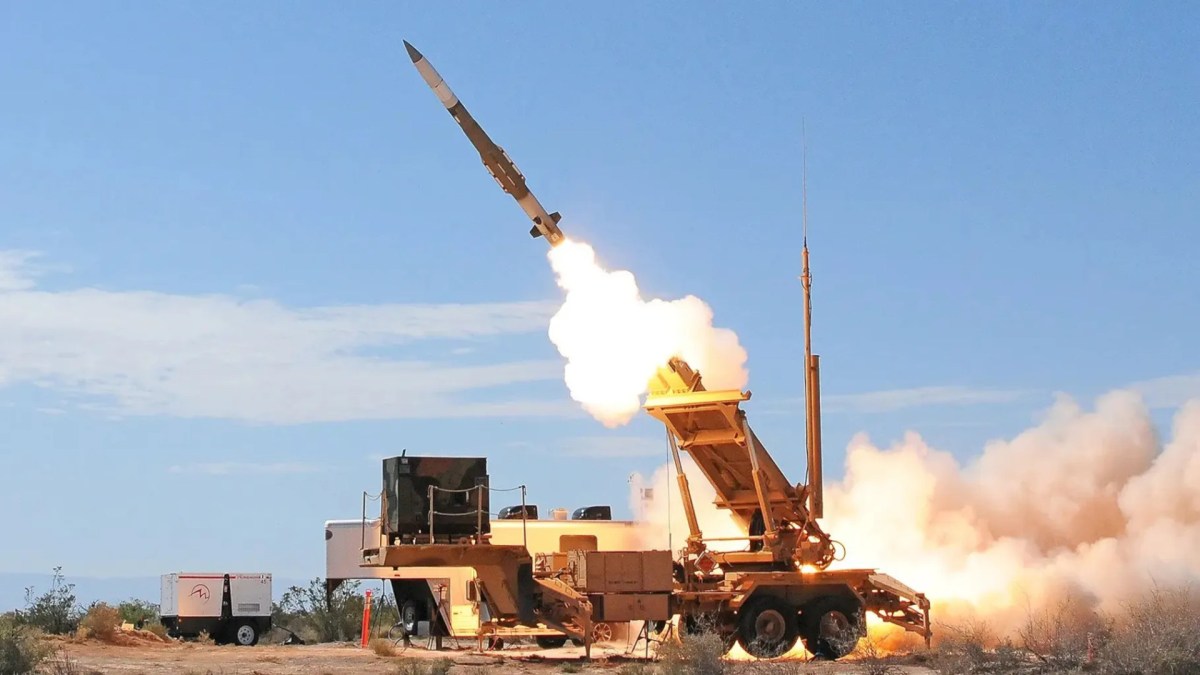
Every situation has an objective. Define it or lose. On April 10, the Pentagon defined one. Lockheed Martin signed a $4,761,000,000 firm-fixed-price contract to accelerate production of the PAC-3 Missile Segment Enhancement interceptor. The contract runs to June 30, 2030. It covers an estimated nine hundred and fifty interceptors. The objective is to push annual output of the PAC-3 MSE from 620 a year in 2025 to 2,000 a year by 2030.
The Terrain Is a Factory Floor in Camden, Arkansas
Read the terrain first. Camden, Arkansas has produced Lockheed missiles since 1979. The site runs 2.2 million square feet of production space on 2,427 acres, with 1,100 employees assembling 75,000 solid rocket motors a year. In November 2025 the company broke ground on a 230,000-square-foot expansion of the same campus. Final assembly runs through Grand Prairie, Texas. On March 25, Lockheed signed a parallel seven-year deal with Boeing to triple production of the PAC-3 seeker subsystem, the part the manufacturing chain had been using as its chokepoint.
The numbers the contract does not say out loud are the interesting ones. The pre-2026 Pentagon average for PAC-3 MSE procurement, according to the Center for Strategic and International Studies, was 270 interceptors a year between 2015 and 2024. Lockheed delivered 620 in 2025, a record high. At 2,000 per year by 2030, the factory will be running at more than seven times the pre-war baseline. That is the objective. Here is the terrain: a decade of deferred capital investment, a seeker line that had to be tripled, and an industrial base the 2026 Heritage Foundation defense index called unable to meet the worst threat environment since World War II.
Timeline
November 2025: Lockheed Martin breaks ground on a 230,000-square-foot expansion of its Camden, Arkansas production campus, the first physical signal of the coming contract ramp.
"Annual production rates indicate that interceptors will be hard to come by when the smoke clears and US allies seek to replenish stockpiles," CSIS analysts wrote in March 2026, a month before the contract was signed.
 Bipi News
Talk to The Reporter
The General
Commanding voice of institutional military authority. Believes order, hierarchy, and hard power are the prerequisites for everything else. Finds idealism naive and chaos inexcusable.
First call is free. 5 minutes, no sign-up required.
What Is the Pentagon Actually Buying?
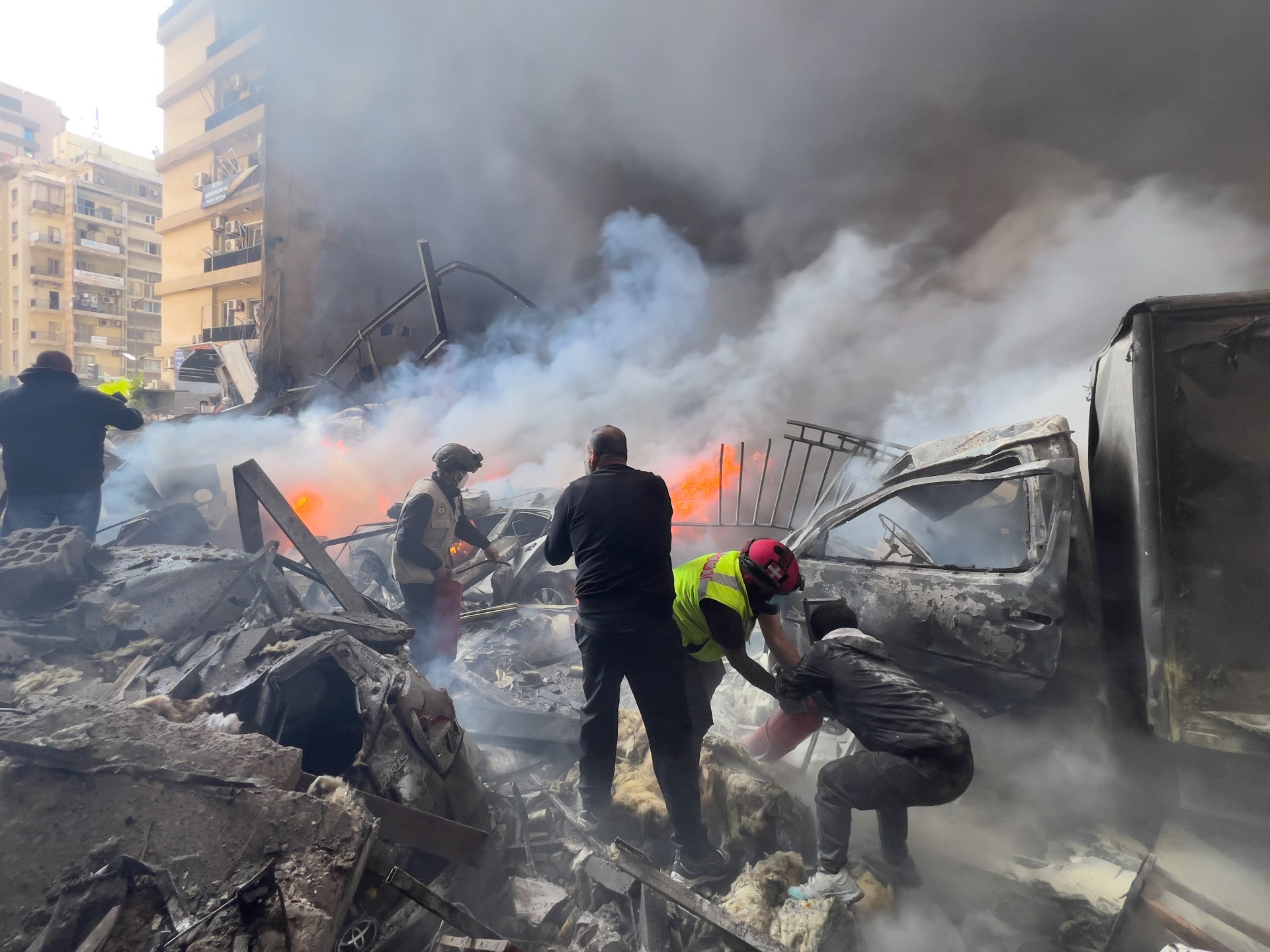
The war that produced the contract has a name. Operation Epic Fury, the US-Israeli air campaign against Iran, opened on February 28. In the first sixteen days of that campaign, US and Gulf forces expended more than 1,800 Patriot interceptors. Two years of 2025 Lockheed output, inside half a month. The twelve-day Israel-Iran war of June 2025 had already burned through 150 THAAD interceptors, a quarter of the Pentagon's total THAAD inventory. The April 10 contract is the check that had to be written once that math became visible at the top of the chain of command.
Every situation has an objective. The objective here is not nine hundred interceptors. The objective is to replenish the arsenal faster than the next fight drains it. At 2,000 per year by 2030, Lockheed will be shipping thirty-eight PAC-3 MSE rounds a week. Ukraine alone burns fourteen of those each week for its own Patriot batteries, and Kyiv has received roughly six hundred PAC-3 MSE rounds across four years of Russian air assault. Subtract Ukraine from the weekly output and twenty-four remain for Saudi Arabia, Poland, Japan, South Korea, Germany, and the United States itself. The math does not close.
Operation Epic Fury, the US-Israeli air campaign against Iran that opened on February 28, consumed more than 1,800 Patriot interceptors in its first sixteen days. That is two years of 2025 Lockheed Martin output.
Verified
"The Pentagon has purchased an average of 270 PAC-3 missiles each year between 2015 and 2024. Lockheed Martin produces around 600 PAC-3 interceptors a year and agreed to scale up production to 2,000 over the next seven years," CSIS reported in March 2026.
Bipi NewsThink Further on BIPI.
Unlimited access to your personalized investigative reporter agent, sourcing real-time and verified reports on any topic. Your personalized news feed starts here.
Learn moreFollow the Money: Who Wrote the Check
“"Annual production rates indicate that interceptors will be hard to come by when the smoke clears and US allies seek to replenish stockpiles," CSIS, Europe Needs an ASAP Program for Air Defense, March 23, 2026.
Of the $4,761,000,000 total, $264,960,000 came from fiscal 2026 Army missile procurement appropriations. The remaining $4,496,040,000, ninety-four percent of the contract value, drew from Foreign Military Sales funds. The Pentagon did not name which partner nations financed which portion. It did not have to. The Foreign Military Sales program pools payments from multiple customers into a single fund, which gives Washington flexibility to shift resources between programs as the terrain changes.
The partners have less flexibility than they would like. In March 2026, the US Army redirected Swiss funds earmarked for F-35 procurement to cover frozen Patriot payments. Bern found out after the fact. A General notes that this is command clarity from the American side and fog of war from the allied side. The industrial base has become a co-op paid for by Riyadh, Warsaw, Tokyo, Seoul, and Bern, and the commander with the checkbook is not any of them.
Ninety-four percent of the $4.76 billion contract value, $4,496,040,000, comes from Foreign Military Sales funds pooled from partner nations including Saudi Arabia, Poland, Japan, South Korea, and Germany.
Verified
Is a Seven-Year Plan the Right Tempo for a Sixteen-Day War?
Bipi NewsKnow someone who should read this?
Share this report with a friend who values evidence-based journalism.
Indecision is the most expensive decision. The January 2026 framework agreement was the Pentagon's. April 10 delivered its first contract. The Boeing seeker deal is the second. The Camden groundbreaking in November 2025 was the third. Three decisive actions across five months, and a General concedes that Pentagon procurement has moved. Reserves? Capital has been committed. Contingencies? They exist on paper. The problem is that the tempo of the plan is keyed to a 2030 production ceiling, while the tempo of the war is keyed to this week's Iranian salvo and next month's Russian drone swarm.
Tim Cahill, who runs Lockheed Missiles and Fire Control, said in January that Lockheed would commit to the industrial-base investment only if the Pentagon provided long-term demand certainty. He got the certainty. The question moves to the next link in the chain. Boeing has a seven-year seeker deal. Aerojet Rocketdyne's solid-fuel line still caps production at the rocket-motor level. Third-tier component suppliers with twenty employees in Illinois and Pennsylvania have no contract cover at all, and unity of command does not exist across this supply graph.
Who
Tim Cahill, president of Lockheed Martin Missiles and Fire Control, set the precondition for the contract: Lockheed would commit to the industrial-base expansion only if the Pentagon provided long-term demand certainty. Cahill got the certainty in January and the first contract in April.
The Commander's Verdict
Concede the obvious. The $4.76 billion contract is a serious industrial-base response. The January framework, the Boeing parallel, the Camden expansion, and the March 25 quadrupling of the Precision Strike Missile line belong in the same campaign. Pentagon procurement, Lockheed engineering, and Army logistics are pulling in one direction for the first time since the Iraq drawdown.
Concede nothing further. The scarce resource is not the interceptor. It is the factory, and the subcontractor, and the pool of workers who know how to solder a PAC-3 seeker without destroying a twenty-thousand-dollar board. Build more of those. Sign longer contracts with deeper penalty clauses. Ask Congress for the authority to write multi-year obligations without annual appropriation fights. Write a twenty-year plan, then resource the first seven years of it. Do all of that before Operation Epic Fury's next sixteen days arrive. The enemy always gets a vote. Commands that forget this lose the next campaign faster than the last one.