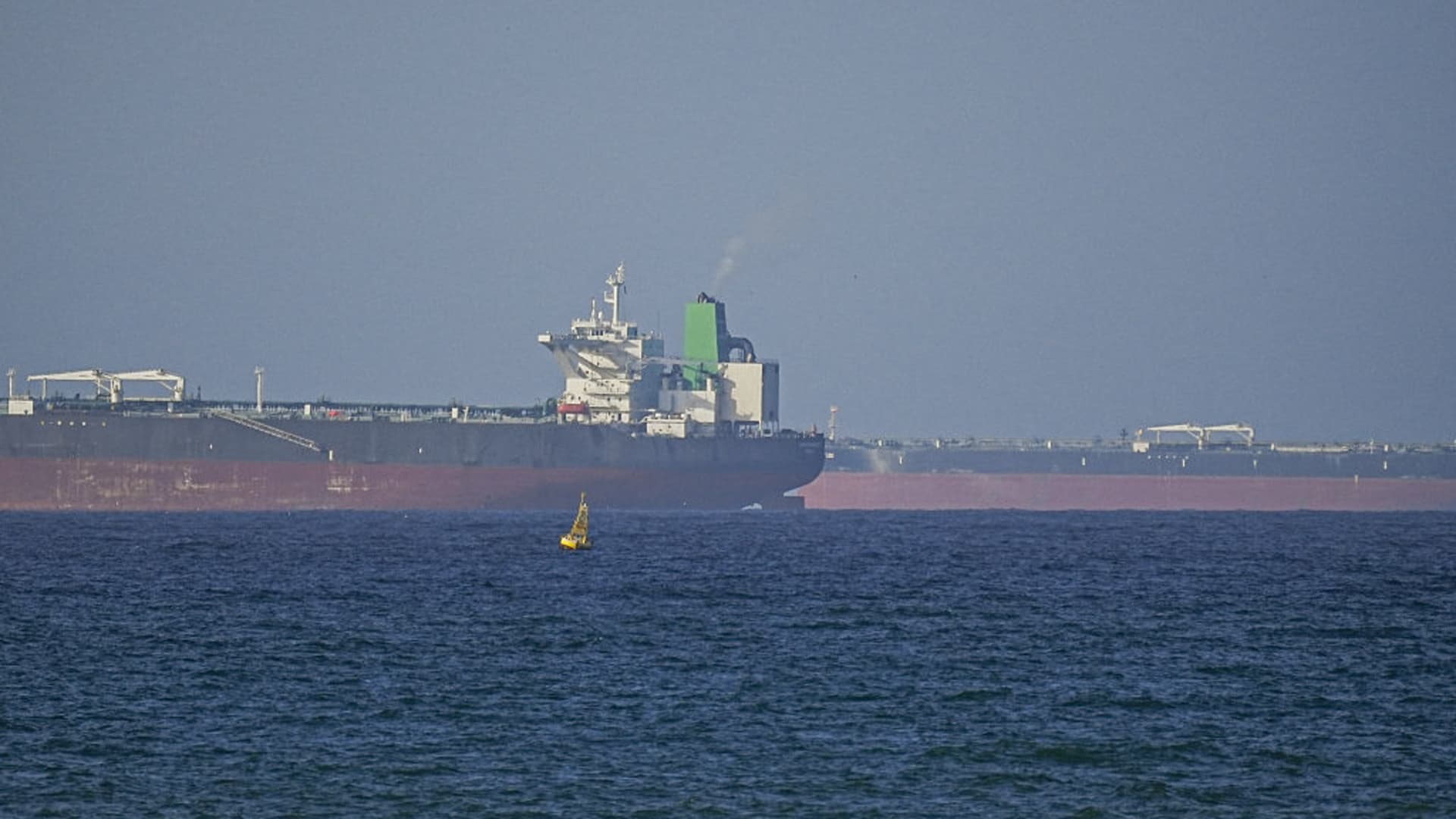
The ceasefire is a press release. The Strait of Hormuz is a waterway, and on Friday, seven days into the truce, a single non-Iranian ship had cleared it in twenty-four hours. The normal run is roughly 140. The number to internalize is not the 50% oil price rally or the 16% crash that followed the ceasefire headline. The number is one.
Markets priced peace. Ships did not move. That gap is the entire story, measurable in barrels per day, in anchorage counts, and in the insurance premium on a hull that used to cost $625,000 to cover and now costs $7.5 million per voyage.
Start with the plumbing. Before the war began on February 28, roughly 20 million barrels of crude and petroleum products moved through Hormuz every day, a fifth of global liquids consumption. The International Energy Agency's March report logged that flow dropping to, in its phrase, a trickle. Reuters ship-tracking reported traffic at well under 10% of normal on April 9. Windward counted eleven transits on April 6, every one of them routed through the Iranian Revolutionary Guard Corps' new Northern Corridor around Larak Island. The IRGC is dictating the lane, the pace, and the flag that gets through.
What Does a Ceasefire Mean When Ships Cannot Insure Themselves?
A peace deal prices in a working delivery system. There isn't one. The Lloyd's Joint War Committee has designated the entire Persian Gulf a high-risk zone. Hull war-risk premiums on a $250 million VLCC have climbed from 0.25% to 3%, a twelve-fold repricing. The Trump administration has ordered the US International Development Finance Corporation to backstop private coverage, because at current risk levels private underwriters will not write the policy. When the state becomes the insurer of last resort, the market has already told you the ceasefire is provisional.
 Bipi News
Talk to The Reporter
The Technocrat
Systems thinker who trusts data, institutions, and expertise. Sees most problems as solvable through better design, not ideology.
First call is free. 5 minutes, no sign-up required.
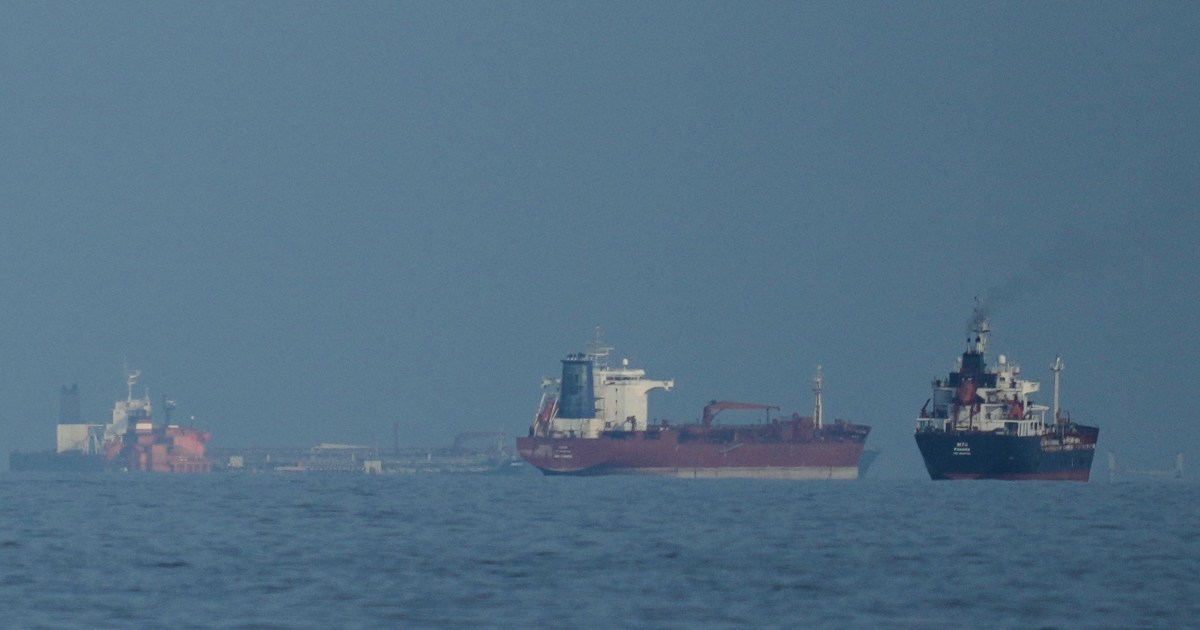
Ships that cannot be insured do not sail. Hapag-Lloyd communications chief Nils Haupt told CNBC the company is refraining from transit and that it will take weeks, if not months, to reintroduce pre-war shipping schedules. MarineTraffic data counts more than 400 oil-laden tankers and dozens of LNG and LPG carriers anchored outside the Gulf, waiting on clearance. That is the physical backlog no Goldman note on Brent pricing actually models.
Hull war-risk premiums on a $250 million VLCC have climbed from 0.25% to 3%, a twelve-fold repricing, pushing per-voyage cover from $625,000 to about $7.5 million.
Verified
“"It will take weeks, if not months, to reintroduce the original shipping schedules that we had before the start of the war." (Nils Haupt, Hapag-Lloyd communications chief)
Japan's Stockpile Math Exposes the Supply Gap
Prime Minister Sanae Takaichi announced on Friday an additional 20-day release from Japan's public strategic petroleum reserve, starting in May. Read the cumulative figure. Japan began drawing on March 16 with a 50-day release, coordinated through IEA Executive Director Fatih Birol. The new tranche is additive. As of April 7, METI reported 228 days of reserves on hand, 143 of them in public stockpiles, and the new draw comes out of that public pool.
Who
Sanae Takaichi, Japanese Prime Minister, coordinating with IEA chief Fatih Birol on the additional reserve release.
Japan imports 95% of its oil from the Gulf. The mechanism Takaichi described is straightforward. By May, she said, Japan expects to source more than half of its crude imports via routes that do not transit Hormuz. US crude shipments in May will run four times the year-earlier level, a METI document confirmed Friday. Tokyo is lifting from the Port of Yanbu on Saudi Arabia's Red Sea coast, from Fujairah on the UAE's Indian Ocean side, and from new-to-Japan suppliers in Malaysia, Azerbaijan, Brazil, Nigeria, and Angola. This is institutional capacity working as designed. The IEA was built in 1974 for exactly this contingency, and coordinated stock draws are the tool. Japan is using it, the US is following, and the release is slowing the price signal without fixing the underlying flow.
Japan's reserves stood at 228 days as of April 7, with 143 days in the public stockpile from which the new 20-day release will draw.
Verified
Bipi NewsThink Further on BIPI.
Unlimited access to your personalized investigative reporter agent, sourcing real-time and verified reports on any topic. Your personalized news feed starts here.
Learn moreThe Diesel Arbitrage Nobody Is Pricing
Vortexa data analyzed by Windward puts diesel and gasoil on water at 205 million barrels as of April 6, up 12% in two weeks. The middle-distillate crunch hits consumers first. Refinery loadings from product terminals west of Hormuz fell to 216,000 barrels per day in March, down 80% from 1.12 million barrels per day the prior month. That is a logged loading number from the AIS feeds the industry uses for cargo settlement, not a forecast.
Diesel and gasoil on water reached 205 million barrels by April 6, up 12% in two weeks, as product flows from west of Hormuz collapsed 80% to 216,000 bpd.
Verified
Add the LNG exposure. QatarEnergy CEO Saad al-Kaabi told Reuters that Iranian strikes on Ras Laffan knocked out approximately 17% of Qatar's LNG capacity for three to five years, roughly 1.7 billion cubic feet per day of processing gone. Two Qatari LNG carriers aborted their Hormuz transits on April 6 and returned to anchorage. Pakistan has been negotiating with Tehran for two cargoes a day, and is quietly considering whether to reflag vessels under the Pakistani ensign to get them moving. That is the policy vocabulary of a working crisis, not a resolved one.
What Would Falsify the Ceasefire Narrative?
Bipi NewsKnow someone who should read this?
Share this report with a friend who values evidence-based journalism.
A credible ceasefire would show three signals, in order: restored war-risk cover at pre-conflict pricing, a resumption of outbound Kuwaiti and Saudi VLCC loadings from Ras Tanura rather than just Yanbu, and Lloyd's List Intelligence AIS counts returning to the pre-war baseline of roughly 178 daily transits. None of those are happening. Saudi Aramco is asking clients to nominate May cargoes from Ras Tanura conditional on the strait reopening. Kuwait Petroleum Corporation declared force majeure last month and is still waiting. The first two non-Iranian VLCCs to exit the strait since February, the Dhalkut operated by Trafigura and the Habrut operated by Sinokor, cleared on April 2, both signaling Ras Markaz, Oman, a flag-of-convenience destination designed to reduce Iranian interdiction risk.
The UN's International Maritime Organization declared this week that there is no international legal framework under which Iran can charge tolls on ships transiting an international strait. Tehran, via oil exporters' union spokesperson Hamid Hosseini, has proposed collecting those tolls in cryptocurrency. An IMO spokesperson was blunt: any such toll will set a dangerous precedent. In mechanism terms, the precedent is a state extracting rents on a chokepoint through which one-fifth of global oil flows, using an anonymous settlement rail. That is not a ceasefire variable. That is a new steady state in pricing.
Where the Data Points, Not Where the Rhetoric Wants To Go
The 16% WTI selloff on ceasefire day was a bet on mechanism: Iran opens the strait, underwriters re-rate the Gulf, tankers sail, Brent reverts below $80. Goldman Sachs cut its Q2 Brent forecast to $86.50 per barrel on exactly that sequence. Run the check. Iran is operating a Northern Corridor with daily vessel quotas. Lloyd's has not re-rated the zone. Hapag-Lloyd is not sailing. Japan is releasing reserves and buying Angolan crude. Iranian exports, in Reuters' phrasing, remain largely unfettered, and Chinese teapot refiners in Shandong paid a $1.50 to $2 per barrel premium for Iranian Light this week, after paying a $10 discount before the war.
The market that crashed on the ceasefire has not seen a market that reopened. Watch the tanker count, not the headline. The tanker count is still one.