An argument is only as strong as its weakest link. On April 10, President Trump posted to Truth Social: "There are reports that Iran is charging fees to tankers going through the Hormuz Strait. They better not be and, if they are, they better stop now. That is not the agreement we have." The claim that sits inside the political message is a legal proposition. Iran cannot lawfully toll ships in the Strait of Hormuz. Break the legal claim into its premises, and examine each premise on its own terms.
Premise One: UNCLOS Prohibits Tolls. True, and Beside the Point.
Timeline
April 10, 2026: President Trump warned Iran on Truth Social against charging tolls in the Strait of Hormuz, writing that any tolls violate the April 7 ceasefire agreement.
The United Nations Convention on the Law of the Sea was signed in 1982 and entered into force in 1994. Part III of UNCLOS creates a regime called "transit passage," which applies to straits used for international navigation. Article 38 gives ships and aircraft a right of transit. Article 44 binds coastal states: "States bordering straits shall not hamper transit passage... There shall be no suspension of transit passage." Article 26(1) prohibits any charge on foreign ships "for transit through the territorial sea." A general toll fails on a fair reading of either article. The premise is correct as drafted.
The beside-the-point part is that Iran never ratified UNCLOS. Iran signed the convention in 1982 and, at signature, issued a declaration stating that it did not accept certain parts of the convention, including the Part III transit passage regime. A signature without ratification does not bind a state to the treaty's substantive obligations. The Iranian government has held that position for forty-four years. So Trump's reliance on UNCLOS text, as text, misses its target.
Premise Two: Customary International Law Binds Iran Anyway. Contested.
Iran signed the UN Convention on the Law of the Sea in 1982 and, at signature, declared that it rejected the convention's Part III transit passage regime. Iran has never ratified UNCLOS. The United States has not signed or ratified UNCLOS either and argues its terms codify customary international law.
Verified
 Bipi News
Talk to The Reporter
The Logician
Surgical argument analyst who dissects claims for logical structure before engaging with content. Finds rhetorical tricks intellectually offensive.
First call is free. 5 minutes, no sign-up required.
The customary-law argument is the one the US must run. It goes like this. UNCLOS's substantive rules either reflect pre-existing custom or have hardened into custom through decades of state practice and opinio juris since 1982. Custom binds all states regardless of treaty status. Iran is therefore bound by the no-tolls rule and the no-hamper rule the same as every other coastal state. The US itself has never ratified UNCLOS, and the US position has always been that it is bound by custom and that UNCLOS codifies that custom. The premise is the bridge between treaty text and Washington's demands.
Iran has a counter. A state that rejects an emerging customary rule openly from the rule's inception, and continues to reject it, is called a persistent objector and is, in the standard view, exempt from that specific rule. Iran's 1982 signature declaration was, on this theory, a timely persistent objection. The International Court of Justice has recognized the persistent objector doctrine in principle, though it has been stingy with applications and has narrowed the doctrine at its edges. Whether a state that never ratified UNCLOS can sustain persistent objector status against a forty-year accretion of state practice is a harder question. Reasonable scholars and state-practice datasets disagree on whether the doctrine survives here.
"Iran has not ratified UNCLOS and maintains that under customary international law, the legal regime of innocent passage applies in the Strait of Hormuz," Alexander Lott wrote in Ocean Development and International Law, the standard academic treatment of the question.
Premise Three: Iran's Own Preferred Regime Also Prohibits Tolls
Bipi NewsThink Further on BIPI.
Unlimited access to your personalized investigative reporter agent, sourcing real-time and verified reports on any topic. Your personalized news feed starts here.
Learn moreHere the argument gets interesting. Iran does not claim the power to charge whatever it wants. Iran claims that the transit passage regime of UNCLOS Part III does not apply and that the older innocent passage regime of UNCLOS Part II applies as customary law. Under innocent passage, Iran has more room. A coastal state may, for essential security reasons, temporarily suspend innocent passage under Article 25(3). That is not the same as charging for it, and the distinction matters because the lesser right to suspend does not, by itself, imply a right to charge.
Article 26(1) of UNCLOS reads: "No charge may be levied upon foreign ships for transit through the territorial sea." Article 26(2) allows charges only "as payment for specific services rendered." Iran's preferred legal regime prohibits tolls with the same force as the regime Iran is trying to escape. The only way a tolling scheme survives either reading is through Article 26(2), and that exception has a narrow history. It covers pilotage, lighthouse dues, tugs in emergencies, and salvage services. It does not cover a general transit fee.
Is There a Way to Call This a "Service"?
UNCLOS Article 26(1) forbids any charge on foreign ships for transit through the territorial sea. Article 26(2) permits charges only as payment for specific services rendered, a category the International Maritime Organization has limited to pilotage, lighthouses, tugs, and salvage.
Verified
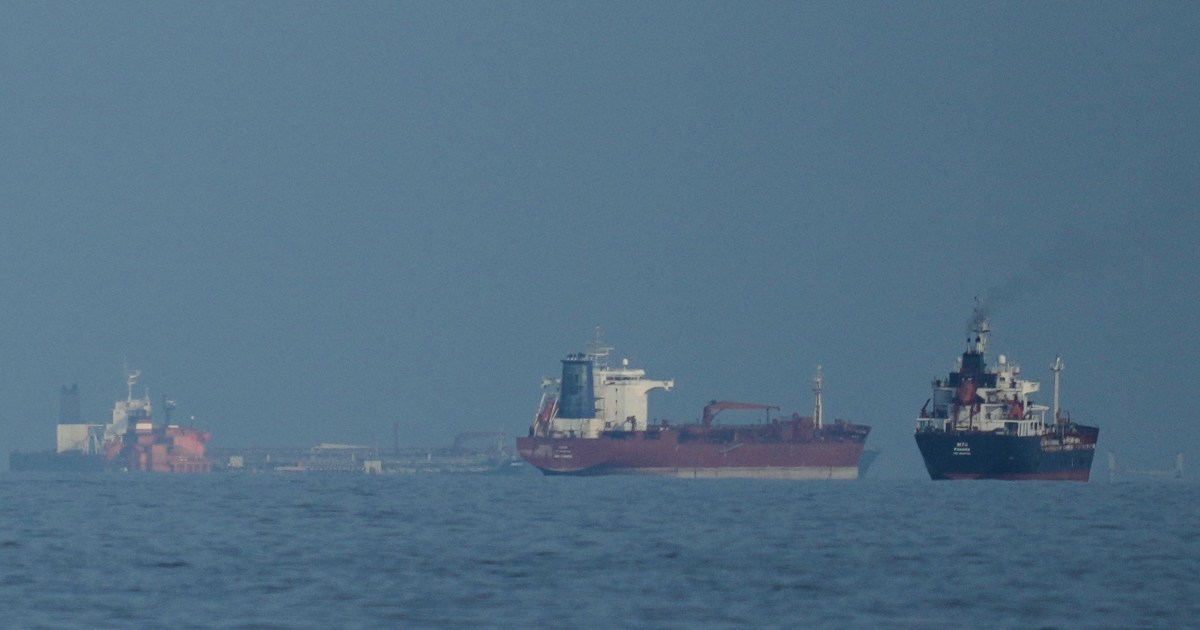
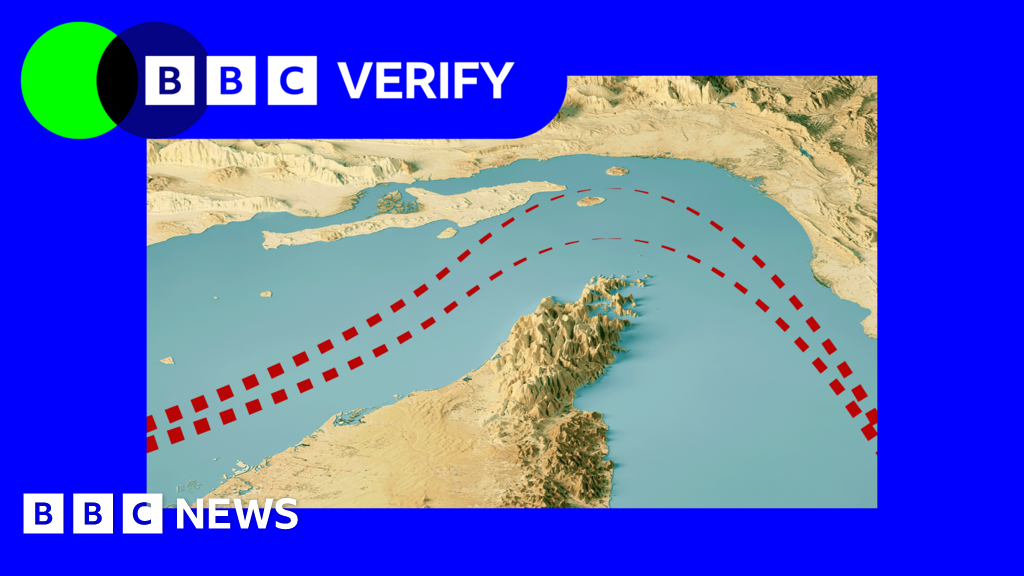
Iran has one remaining move. Tehran could claim that the special route announced this week by the Islamic Revolutionary Guard Corps, which directs ships around Larak Island to avoid the mines Iran laid in the main lanes, is a "service" within Article 26(2). Follow that to its conclusion. The coastal state creates a hazard, then charges ships for the corridor that bypasses the hazard. The argument treats the solution to Iran's own conduct as a service rendered by Iran. Under the same logic, any state could lay mines in a strait, declare a toll-paying route around them, and call the toll a fee for services. If Article 26(2) permitted that, it would swallow Article 26(1) and make the prohibition a dead letter in exactly the cases it was meant to reach.
Bipi NewsKnow someone who should read this?
Share this report with a friend who values evidence-based journalism.
Iran's invocation of innocent passage also contradicts Iran's own current conduct. Article 17 of UNCLOS codifies the substance of innocent passage: ships of all states enjoy the right to cross the territorial sea. Article 24 obligates coastal states not to hamper that right except as provided in the convention. A state that lays mines across a navigation channel cannot credibly claim it is not hampering passage. If Iran invokes innocent passage as its shield, Iran must also honor the Article 24 duty not to hamper. A shield that depends on breaking the rule it invokes is not a shield.
Who
Hamid Hosseini, spokesperson for Iran's Oil, Gas and Petrochemical Products Exporters' Union, told the Financial Times that Iran planned to demand the Hormuz tolls in cryptocurrency during the ceasefire.
"Iran cannot dispose of the right of ships to navigate in the Strait of Hormuz. The country is not conceding anything: it is obligated to allow passage," the Spanish daily El Pais editorialized on April 9, 2026.
Which Argument Actually Survives?
“"Iran cannot dispose of the right of ships to navigate in the Strait of Hormuz. The country is not conceding anything: it is obligated to allow passage." El Pais editorial, April 9, 2026.
Concede what should be conceded. The persistent objector question is genuinely contested in international legal theory, and a careful lawyer would not call Iran's UNCLOS Part III exemption frivolous. The US position on customary law is not universally accepted, and Washington's refusal to ratify UNCLOS exposes its arguments to obvious retort. Trump's Truth Social post is a political claim dressed as a legal one, and the political part matters. The "agreement" Trump references is the April 7 ceasefire, not a treaty. These concessions do not rescue Iran's toll proposal.
The toll proposal fails under the transit passage regime, which prohibits both levies and hampering. It fails under the innocent passage regime that Iran prefers, which prohibits the same levy. The "service rendered" escape hatch fails because a state cannot charge for the mitigation of a hazard that the state itself created, and because Iran is already in breach of the non-hamper rule whose protection it is trying to invoke. Trump's path to his conclusion has a gap in the customary-law premise, and his argument would be cleaner if he stated that premise instead of assuming it. Iran's path has a structural self-contradiction that survives no reading. The weakest link in the no-tolls chain sits in Iran's chain, not in Trump's.