For fifty years, the migration was simple. Americans left Detroit for Dallas, Cleveland for Tampa, Buffalo for Phoenix. From 2019 to 2022 the pattern accelerated: Austin home prices doubled. Phoenix rose 60 percent. Miami rose 50 percent. In the twelve months ending February 2026, that map inverted. Cape Coral, Florida dropped 9.6 percent year over year. Kansas City rose 8.6 percent. Cleveland rose 5.9 percent. Pittsburgh rose 5.8 percent. Florida, California, and Texas all show every metro in the price-decline column. Fortune's April 11 market snapshot, citing the American Enterprise Institute Housing Center, names the shift the affordability economy. Underneath that label is the biggest migration reversal in modern American data.
The Reversal in One Table
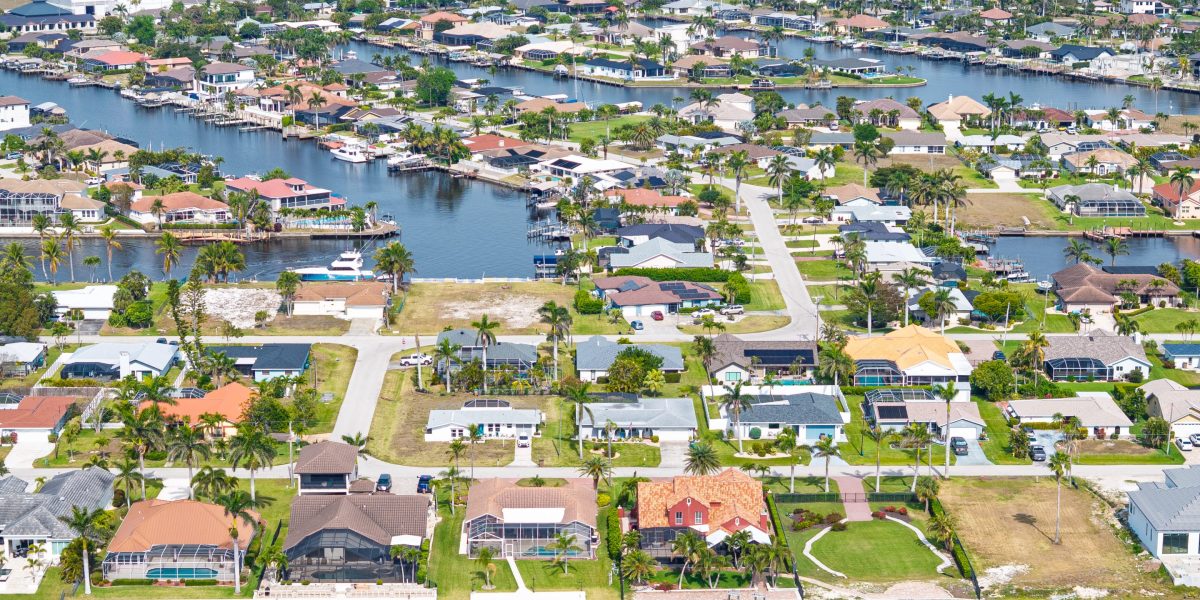
American Enterprise Institute co-directors Ed Pinto and Tobias Peter tracked 53 US metros. Twenty-eight of them posted year-over-year price declines through February. Every metro in Florida, California, and Texas is on that list. The top five laggards are Cape Coral at -9.6 percent, North Port at -6.1 percent, Memphis, Tucson, and Palm Bay between -3.8 and -5 percent. The top five gainers read like a list of cities American buyers were told to leave twenty years ago: Kansas City at +8.6 percent, Pittsburgh +5.8 percent, Cleveland +5.9 percent, Milwaukee +5.6 percent, and Grand Rapids +5.1 percent. National year-over-year appreciation ran 1.1 percent, the slowest number AEI has recorded since it started tracking in 2012.
Why Did the Sun Belt Stop Working?
AEI Housing Center: 28 of America's 53 largest metros posted year-over-year price declines through February 2026. Every Florida, California, and Texas metro is on that list.
Verified
Cape Coral, Florida: home prices down 9.6 percent year over year. Kansas City: up 8.6 percent. The five worst performers from 2022 are now among the five worst for 2026 — and vice versa.
Verified
 Bipi News
Talk to The Reporter
The Futurist
Analytical long-horizon thinker who maps emerging trends to their logical conclusions. Believes most contemporary debates are arguments about the past while the future arrives uncontested.
First call is free. 5 minutes, no sign-up required.
Four forces broke the Sun Belt's run. First, price overshoot. Austin home values doubled between late 2019 and mid-2022, which is what happens when mortgage rates fall from 4.6 percent to 2.6 percent and buyers chase the monthly payment, not the sticker price. Second, the mortgage reset. Rates now sit near 6.5 percent. A median Austin home at its 2022 peak costs 35 percent more per month to carry today than at the top of the bubble, even if the listed price held flat. Third, insurance. Florida's average homeowners premium tripled between 2019 and 2024. DeSantis's January 2026 rate relief package trimmed Miami and Broward premiums 14 percent off an elevated base, which is a cut on paper and a still-high bill in the mailbox. Fourth, climate. Cape Coral and Palm Bay are not falling because buyers stopped wanting Florida. They are falling because the reinsurers stopped wanting Florida.
Three Second-Order Effects Already Visible
Three downstream effects are measurable today. Migration flows reversed: Offerpad's March 2026 migration report shows net inflows into Cleveland, Pittsburgh, Detroit, and Buffalo, and net outflows from Austin, Miami, and Phoenix for the first time since the 1970s. Tax base pressure: Sun Belt municipalities built budgets on 2022 property values, and county assessors in Lee County, Florida and Maricopa County, Arizona are drafting the first rounds of downward reassessments, which squeeze school districts and public safety payrolls on timelines the governors have not campaigned on. Political geography shifts last: every major Sun Belt state runs on the assumption of continued in-migration. If that stops, the Electoral College map of 2032 looks different from the one either party is planning around today.
Bipi NewsThink Further on BIPI.
Unlimited access to your personalized investigative reporter agent, sourcing real-time and verified reports on any topic. Your personalized news feed starts here.
Learn moreWhat Does 2030 Look Like if This Trend Holds?
Scenario one: the trend holds. AEI projects national home prices fall 1 percent by the end of 2026, then 2 percent in each of 2027 and 2028. Cleveland's median home price, 239,000 dollars in February 2026, clears 275,000 dollars by 2028 at the current pace. Austin's median falls another 15 percent from today's level. The Midwest reindustrialization story gets a labor-force tailwind nobody is modeling. Scenario two: rates collapse. If the Fed cuts into a recession and 30-year mortgages return to the low 4s, the Sun Belt bounces and the Rust Belt hold flattens. Ed Pinto bets on scenario one for the next 24 months. His exact phrase to Fortune: we will see more of the same.
The Curves People Miss
Who
Ed Pinto — co-director, American Enterprise Institute Housing Center. Projects another 24 months of Sun Belt declines and Rust Belt gains before any reset.
“We will see more of the same. — Ed Pinto, AEI Housing Center, to Fortune
Bipi NewsKnow someone who should read this?
Share this report with a friend who values evidence-based journalism.
Three curves most commentators are not tracking. Remote work settled at 22 percent of US employees through March 2026 and multiple sources forecast it holds near 25 percent through the decade. That is a permanent re-allocation of residential demand, independent of any return-to-office narrative. Climate reinsurance premiums, the wholesale costs behind every homeowners policy, rose 30 percent in 2024 and another 20 percent through early 2026. No governor can legislate those down. Demographic pull: the Midwest now offers more affordable housing relative to median income than any US region has since the 1990s. Pittsburgh's income threshold to buy a typical home sits at 64,106 dollars. Cleveland's sits at 66,280 dollars. Young buyers do not migrate for weather when the math on a 30-year note does not work.
Remote work: 22.6 percent of US employees worked remotely at least partially in March 2026. Forecasts put the share near 25 percent through the decade.
Verified
The Trend Break That Would Invalidate This Piece
The reversal breaks if three conditions line up together. Mortgage rates return under 4 percent. Florida and Texas build enough reinsurance capacity to cap premium growth. Remote work drops below 15 percent of US employees. None of those conditions are impossible. They are improbable simultaneously, on any timeline that matters to a buyer choosing a home this year. Prices do not wait for ideal conditions. They clear at the conditions that exist.
Ed Pinto frames the shift as a return to normal. The decades in which the Sun Belt grew at twice the rate of the rest of the country were the anomaly. The affordability economy is the mean reasserting itself. The Sun Belt is becoming normal, and what ends is the premium it commanded for fifty years. The under-40 buyer priced out of Austin has options their older siblings did not: a 1,600 square foot Pittsburgh house for 215,000 dollars, walkable Cleveland neighborhoods at half the Miami price, Milwaukee school districts with rising scores. The next American decade will be built somewhere different from the last one.